She walks into the room quietly, then somehow owns it without trying.
She smiles. She sits down. She speaks softly.
There is nothing performative about Jada Facer, 25. No sense that she is playing a role. She feels familiar, like someone you’ve known for years.
Then you remember.
She was once a fixture on TV as a child, playing the younger sister of Joey Lawrence on the sitcom “Melissa & Joey.” She was a kid then. Now she is all grown up, and in a different world entirely: music.
And she has done well in it.
Over 1.3 billion views on YouTube. Millions of followers across platforms. A global audience that keeps growing not in sudden spikes, but in steady waves.
Song by song. Post by post.
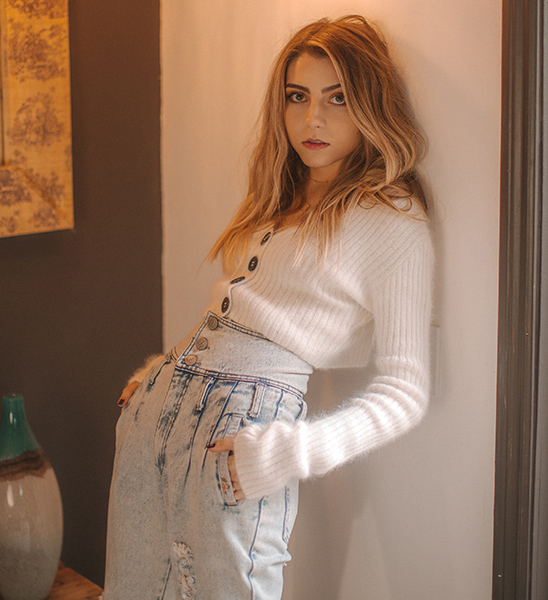
It is hard not to be awed by that.
Especially because she didn’t get here the usual way. There was no viral explosion. No single moment that changed everything. What Jada built came slowly. And it came from something simple: telling the truth through songs as she feels it.
“I usually start with lyrics,” she says of her songwriting process. “Then I kind of feel my way into what the melody would sound like.”
She writes with a piano or a guitar. No formula. No rush.
In a digital space driven by speed, that choice stands out.
She started writing at eight years old.
“I was so young then and I was just kind of experimenting,” she says. “But I loved the process so I kept at it.”
There was no strategy. Just curiosity.
Her influences reflect the same instinct for honesty. She points to Ed Sheeran and Taylor Swift, songwriters who made vulnerability feel like strength, artists who let the writing lead.
“I like that their songs are raw, honest, vulnerable,” she says. “Something that I also share.”
That approach shows clearly in her recent single, “I Almost Said…”
It does not fight for attention in a crowded feed. It lingers instead. It sits in the space between feeling something deeply and never saying it out loud. The “what ifs.” The messages left unsent.
“It reflects on the unspoken words after love fades,” Jada explains.
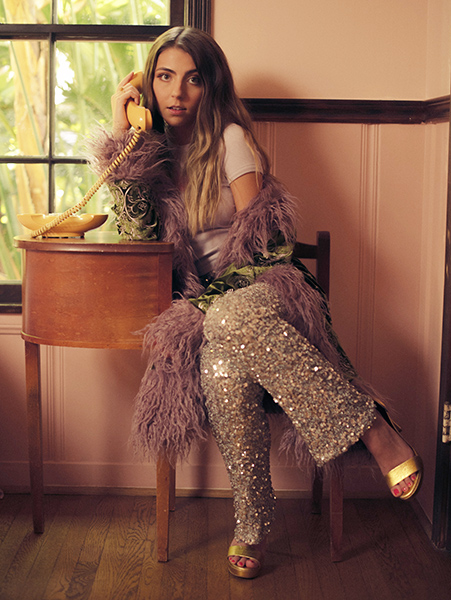
The same restraint carries into her debut EP, “Party Dress.” The project moves through different stages of a relationship, hope, doubt, heartbreak, acceptance.
Tracks like “Toothpaste,” in collaboration with Jonah Baker, hold that fragile kind of optimism right before it breaks, while other songs stay longer in the aftermath.
In places like the Philippines and across Asia, she has found listeners who respond to music that tells a story without forcing emotion. Songs that feel lived in, not manufactured.
Well, if it isn’t obvious by now, Jada does not chase trends. She does not adjust herself to what is working at the moment. She stays with what feels real.
Even when asked about artificial intelligence entering music, her response is unshaken.
“To each his own,” she says. “Maybe they feel like they need that kind of tool… personally, it doesn’t bother me.”
For Jada, the method matters less than the result. What matters is whether a song feels honest.
That belief continues to shape where she is headed.
She plans to keep writing the way she always has, with emotion, building slowly, letting songs take their time.
There is no urgency to become something else. No pressure to fit the moment.
Just the truth, as she hears it.