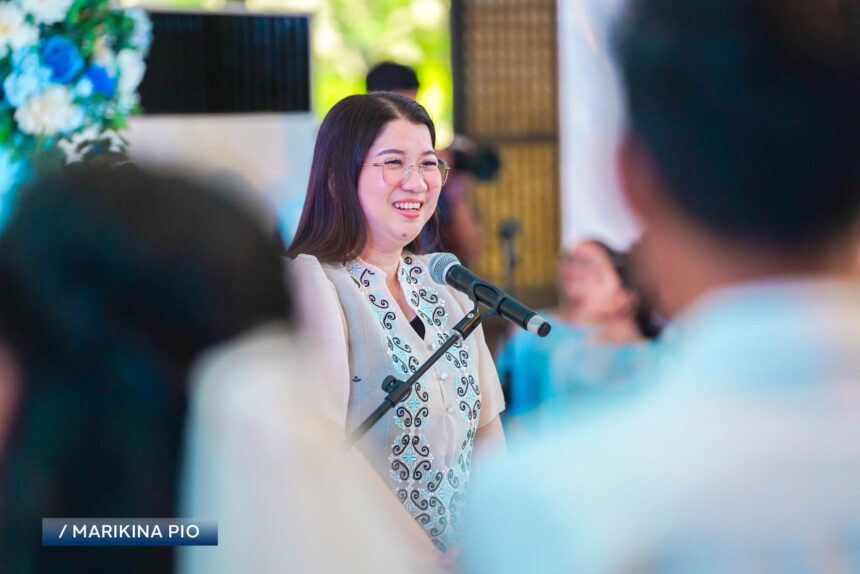
Marikina City Mayor Maan Teodoro has urged the Department of Public Works and Highways (DPWH) and the Department of Environment and Natural Resources (DENR) to ensure the protection of the city’s remaining mature trees and green spaces as the Marcos Highway-St. Mary Avenue Bridge Project (Bridge 1) moves forward.
In a letter to DPWH Secretary Vince Dizon and DENR Secretary Juan Miguel Cuna, Teodoro said the project can improve connectivity, ease traffic congestion, and strengthen flood resilience while minimizing its environmental impact.
Based on the Semi-Annual Environmental Monitoring Report for July to December 2025 prepared by Lichel Technologies Inc. and submitted to the DPWH and the Asian Development Bank, approximately 514 trees and plants may be affected by the project.
“While the project serves an important public purpose, all reasonable measures should be undertaken to preserve the City’s remaining green spaces and mature trees to the greatest extent possible,” Teodoro said.
Call for preservation and transplanting
Teodoro called on the DPWH, in coordination with the DENR, to validate all affected trees and prioritize the retention of those that can still be preserved.
She also urged the proper earthballing and transplanting of trees that must be removed in accordance with DENR standards and accepted arboricultural practices.
Teodoro further requested that transplanted trees be relocated within the vicinity of Provident Village or other suitable nearby public areas to retain their environmental and ecological benefits for the surrounding community.
She likewise called for a comprehensive maintenance and monitoring program to ensure the survival and continued growth of the transplanted trees.
Teodoro also sought close coordination with the city government in selecting relocation sites and implementing and monitoring the environmental measures.
Balancing development and environment
“We believe that the public infrastructure project can achieve its public purpose while mitigating its effect on the environment and preserving Marikina’s urban landscape for the benefit of the community,” Teodoro said.
“In the interest of the shared commitment to environmental stewardship, the City Government of Marikina looks forward to the continued cooperation of the DPWH and the DENR regarding this matter,” she added.
Teodoro’s call came as Marikina continues to pursue projects aimed at expanding public open spaces and promoting environmentally sustainable urban development.
In June, the city government launched the Marikina Active Transport Park in Barangay Marikina Heights to promote walking and cycling while providing spaces for recreation and community activities.
The project will feature a skate and BMX park, end-of-trip facilities for cyclists and commuters, a pet park, an outdoor exercise area, and community spaces once completed and opened to the public.
Teodoro earlier said no trees would be cut for the project, with its design built around the existing trees to preserve the area’s green landscape.
The city has also promoted active mobility through its Marikina Together: Car-Free Sundays program, which temporarily opens a portion of Gil Fernando Avenue to pedestrians and cyclists for walking, jogging, cycling, and other recreational activities.
In January, the Metropolitan Manila Development Authority and the Marikina City Government inaugurated the rehabilitated and improved Jesus Dela Peña Recreational Park to provide additional public open spaces for children and senior citizens.
These initiatives reflect the city’s efforts to expand public spaces and promote a greener and more livable urban environment while balancing infrastructure development with environmental protection.