By Aaron Recuenco
The national government should craft a master plan to effectively and efficiently address garbage problems not only in Metro Manila and nearby areas but also in other urban centers across the country, the Department of Public Works and Highways (DPWH) said.
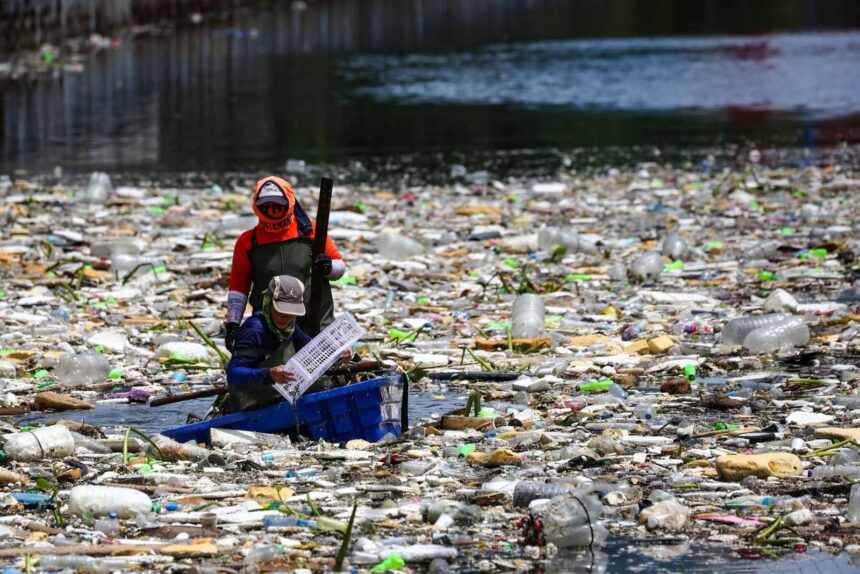
DPWH Secretary Vince Dizon pointed to the massive volume of trash that floated and clogged the Redemptorist waterway in Parañaque after heavy rains pounded Metro Manila and nearby provinces in recent days.
“The government should come up with drastic measures. We cannot do this forever, every day. This kind of approach is not sustainable,” Dizon said, referring to the all‑out garbage clean‑up at the Redemptorist waterway and the Manila Bay area.
He explained that garbage clean‑up is part of regular flood‑control measures in Metro Manila, noting that large volumes of trash often block natural waterways in the metropolis.
While he did not elaborate on a drastic solution, Dizon cited trash‑to‑energy technology as one option that could be included in a master plan.
Experts said the huge volume of garbage that floated near Baclaran Church was an accumulation of metric tons of trash from various areas in Parañaque, carried to the waterway by high tide.
The build‑up reportedly began on Monday, Aug. 10.
Local authorities noted it was the first time such a scene occurred in the area, but Dizon stressed that improper garbage disposal has been a recurring challenge for decades.
He cited the experience of the DPWH and the Metropolitan Manila Development Authority (MMDA), which collect truckloads of trash from waterways during the rainy season.
In July last year, for instance, the MMDA lamented improper waste disposal after retrieving large pieces of damaged furniture and appliances—including a sofa and a refrigerator—from rivers.
“We need a master plan to address the garbage problem. This will remain a recurring issue, a never‑ending clean‑up, if we do not act decisively,” Dizon said.
In the case of the sea of garbage in Parañaque, Dizon said resources from the MMDA, DPWH, and local government units—including manpower through emergency employment—were redirected to the clean‑up drive.
The MMDA earlier underscored the urgency of clearing waterways to prevent widespread flooding in Parañaque City and nearby areas, since the river where tons of trash piled up is one of the major channels leading to Manila Bay.
Aside from heavy equipment and trucks to haul garbage, the MMDA also deployed a trash skimmer to expedite the clean‑up.
A trash skimmer is a specialized mechanical device designed to collect floating trash, plastic, and organic debris from rivers, harbors, and waterways to prevent clogging and pollution.
So far, around 400 metric tons of trash have been collected from the river, and authorities continue to deploy more personnel and resources to sustain the clean‑up drive.