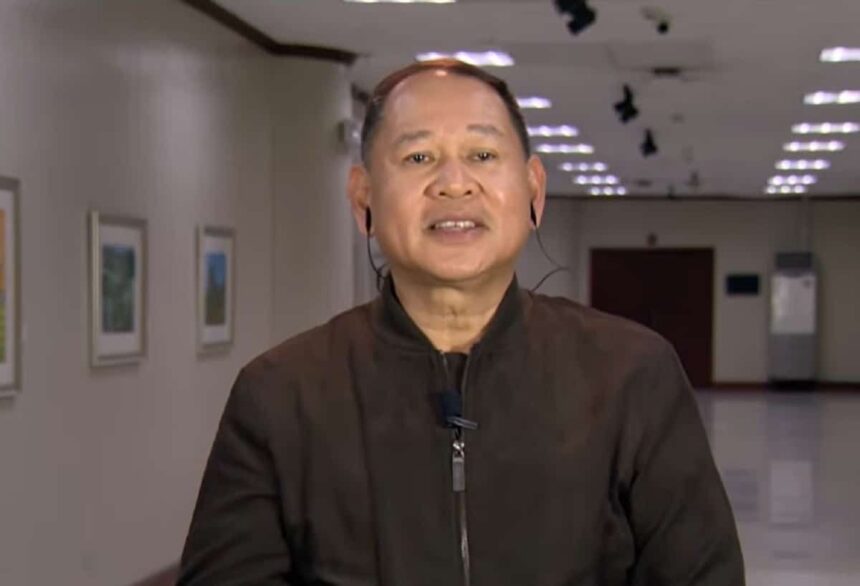
The Criminal Investigation and Detection Group (CIDG) has recommended criminal charges against Senate Office of Sergeant‑At‑Arms (OSAA) chief Mao Aplasca and at least two of his men after they fired warning shots inside the Senate on May 13 — despite investigators finding there was no actual threat at the time.
CIDG director Maj. Gen. Robert Morico II stressed that Aplasca’s actions violated the Implementing Rules and Regulations of Republic Act 11917, or the Private Security Services Act.
The law outlines six stages before the use of lethal force, none of which permit warning shots.
“It is very clear in our investigation that there was no attack in the Senate, there was no intent,” Morico said, adding that the OSAA’s response went against basic security protocols and common sense.
He noted that if there had truly been an attack, OSAA personnel would not have abandoned the area where shots were fired.
Investigators recovered 44 spent cartridges inside the Senate, fired from four different firearms.
Three alleged shooters surrendered their weapons, while ballistics tests are ongoing to determine if 23 of the cartridges were fired from Aplasca’s Scorpion CZ 9mm pistol carbine.
Morico acknowledged that Aplasca, a retired two‑star police general, may have acted on false information suggesting National Bureau of Investigation (NBI) agents were preparing to storm the Senate to arrest Senator Ronald “Bato” Dela Rosa.
CIDG is now probing who may have misled him, noting that administrative sanctions could also be recommended.
Although Aplasca did not personally appear before investigators, he submitted his firearm for examination.
The CIDG has forwarded its findings to the Department of Justice (DOJ) for case build‑up. (Aaron Recuenco)