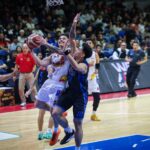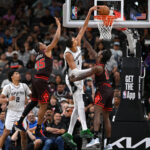
THIS unfolded late in a packed PBA Commissioner’s Cup curtain-raiser last week.
Punches were thrown midway through the fourth quarter. Both protagonists were ejected. Summons from the Commissioner’s Office were issued. Explanations were given. Apologies offered. Sanctions followed.
TNT Tropang 5G’s Glenn Khobuntin drew a two-game suspension and a P70,000 fine after appearing on video to have struck first and triggered the dust-up.
Rain or Shine import Jaylen Johnson, impressive as his lightning-quick jabs were, still received a one-game ban and a P50,000 fine for retaliating.
A last-ditch appeal was made—and denied with finality. The penalties stood. ROS coach Yeng Guiao had some parting words on social media. The PBA saw no need to respond.
End of the story? Probably—unless something similar happens again.
Which is why the PBA may want to revisit its rules governing conduct in situations like this, as well as the sanctions that come with such infractions.
A rogue import who starts a fight—especially one that draws in both benches or spills into the stands—deserves to have the book thrown at him. Such belligerence must be dealt with swiftly and decisively.
But what if the import isn’t the one who initiated the brawl?
It doesn’t have to be a cheap shot or a sucker punch. It could be a sneaky elbow—like the one Kent Benson once dealt Kareem Abdul-Jabbar. Or a bare-knuckle shot to the back of the head. Even a well-placed hit below the belt.
Any of these is enough to make anyone—not just imports—lose their temper, fly into a rage, and surrender control.
This is not about condoning aggression that falls outside the bounds of sportsmanship and fair play. It is about recognizing reality: discipline is not a one-size-fits-all matter.