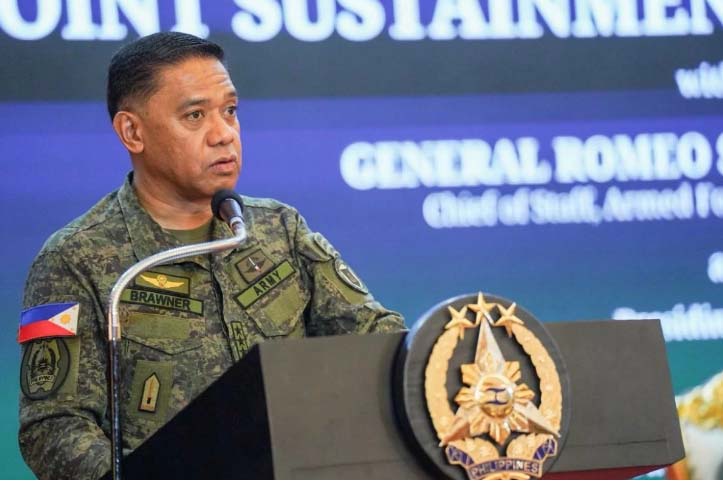
The Armed Forces of the Philippines (AFP) said current domestic security conditions make it unlikely that two Indian nationals linked to the Sydney Bondi Beach mass shooting trained for terrorism in the country.
AFP Chief of Staff Gen. Romeo Brawner Jr. said initial information indicated the two suspects identified as Sajid Akram, 50, an Indian national, and his son, Naveed Akram, 24, an Indian-Australian national, arrived in Manila together on November 1 and later went to Davao City.
Authorities are validating their movements, including the places they visited and the people they may have met, Brawner noted.
“That is all the information we have for now, and we are studying it further. We are investigating the places they visited and the people they may have met,” Brawner said.
But the military chief addressed speculation circulating abroad that extremist groups in the Philippines could have provided training to the suspects.
He said this does not align with the country’s current domestic security situation, particularly in Mindanao where terrorist groups have been significantly weakened.
Records from the AFP showed that from a high of 1,257 local terrorists in 2016, the manpower of local terrorist groups has dropped to around 50 in 2025.
While not completely eliminated, Brawner noted that the sharp decline followed years of sustained military operations, peace initiatives, and community-based programs that are enough to prevent radicalization.
Between 2016 and 2025, government forces also neutralized 28 high-value individuals through armed encounters, arrests, and surrenders, the data noted.
Ten of these were group leaders including Abu Sayyaf Group (ASG) leader Isnilon Hapilon, who was killed during the Marawi Siege in October 2017; Maute Group leaders Abdullah Maute and Owaida Marohombsar alias Abu Dar, who were slain in August 2017 and March 2019 respectively; Mohammad Jaafar Maguid, leader of the Dawlah Islamiyah-Maguid Group (DI-MG), killed in January 2017; Salahuddin Hassan, leader of the Hassan Group, killed in October 2021;
Esmael Abdulmalik alias Abu Turaifie, leader of the Islamic State (IS)-linked Turaifie Group, who surrendered in August 2023; Fahrudin Hadji Satar alias Abu Bakar and Khadafi Mimbesa alias Engineer, leaders of DI-Maute Group, who were killed in June 2023 and January 2024 respectively; Bangsamoro Islamic Freedom Fighters (BIFF) leader Muhiddin Animbang, killed in April 2024; and most recently, Mohammad Usman Solaiman, leader of the DI–Hassan Group, who was killed in an encounter just last December 7.
The AFP said the neutralization of the terrorist leaders created a leadership vacuum while the remaining groups are fragmented, largely defensive, and no longer capable of planning or sustaining large-scale attacks.
The AFP also noted that there have been no recorded terrorist training activities, recruitment efforts, or major attacks by domestic terror groups since 2016. (Martin Sadongdong)