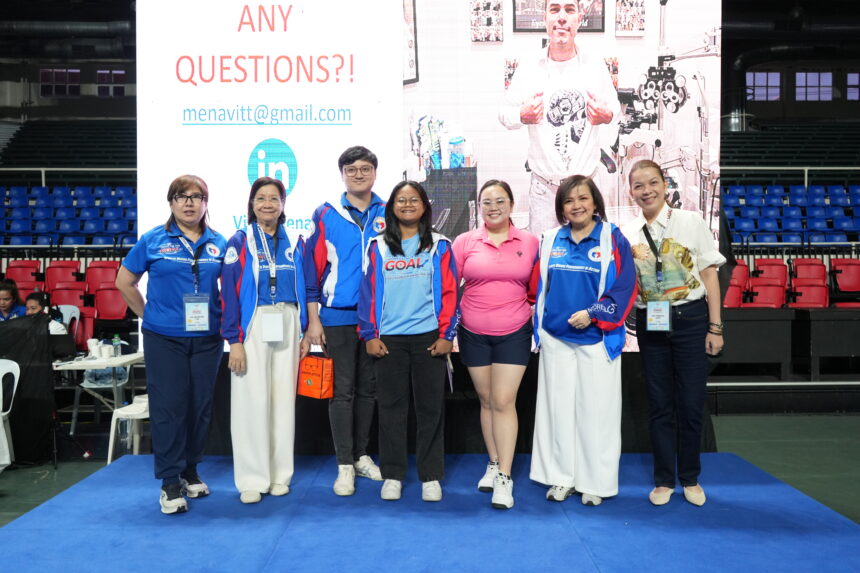
The Philippine Sports Commission and the FDM Neuroscience and Vision Care Research and Training Institute have taken the first step to see to it that the national athletes are in their best shape possible.
Ninety-four members of the national pool from various sports disciplines last Thursday underwent functional assessment procedures at the Rizal Memorial Sports Complex under vision care experts provided by the institute.
The testing ended Saturday but will continue from here on especially among athletes and even coaches who will be needing additional care that should benefit them in the long run.
The program is a collaboration between the PSC under chairman Patrick Gregorio and the FDM Institute led by its chairman, Dr. Teresita Yambot.
“This is part of our continuing efforts to help our national athletes and provide them with the best care possible, in this case their vision,” said Gregorio.
“Indeed an eye opener on what it takes for our national athletes to perform even better,” he added.
The two-day, cost-free functional assessment on members of the national pool is part of the program dubbed “Sight on the Goal, Sports Performance Vision in Action.”
Yambot, past Chairman of the Board of Optometry of the Professional Regulation Commission and Dean Emeritus of the National University MOA School of Optometry, said the initial assessment of the national athletes went well with minimal concerns.
“We noticed that most athletes showed eye irritation and are starting to develop pinguecula and pterygium (caused by chronic exposure to UV light, wind and dust),” she said.
Yambot also aired concern on athletes having dry eyes that could eventually cause a problem.
“Kahit 20/20 vision mo, kapag nag-lacrimation (teary eyes) during the game, magiging cloudy and blurred ang vision that will affect the performance. They need to hydrate the outer eyes to maintain clarity of vision all the time,” she explained.
Also on hand to oversee the program were top-level institute members led by Dr. Marisse Paredes, Dr. Maricris Lim, Dr. Analyn Cruz, Dr. Aaron Lising Dr. Sandra Bernardo, and Dr. Noel Paed, with a complete staff.
Twenty-one athletes representing a mere two percent of those who underwent the initial procedure would need re-testing due to the “red-green deficiency,” the most common form of “inherited color vision deficiency, affecting the ability to distinguish between red and green hues, and commonly causing confusion between reds, greens, oranges and browns.”
“After seeing the visual condition of the athletes we felt the need to help them. All those with red-green color deficiency will be provided free neuro-vision rehabilitation until they have normal color perceptual skills,” said Yambot.
The institute will process the statistical data they gathered in the two days of testing and will forward it to the PSC.
They also stressed the importance of eye-hand coordination and that it takes more than a 20/20 vision for the athletes to reach their peak performance.
“Even if they see clearly, is it properly processed to the brain? We need to check that too. It is about using both eyes and processing it to the brain,” said Yambot.
The FDM Institute thanked Gregorio for the partnership that allowed the latter to be of help to the national athletes.
“Chairman Pato, thanks for your valuable support,” said Yambot.