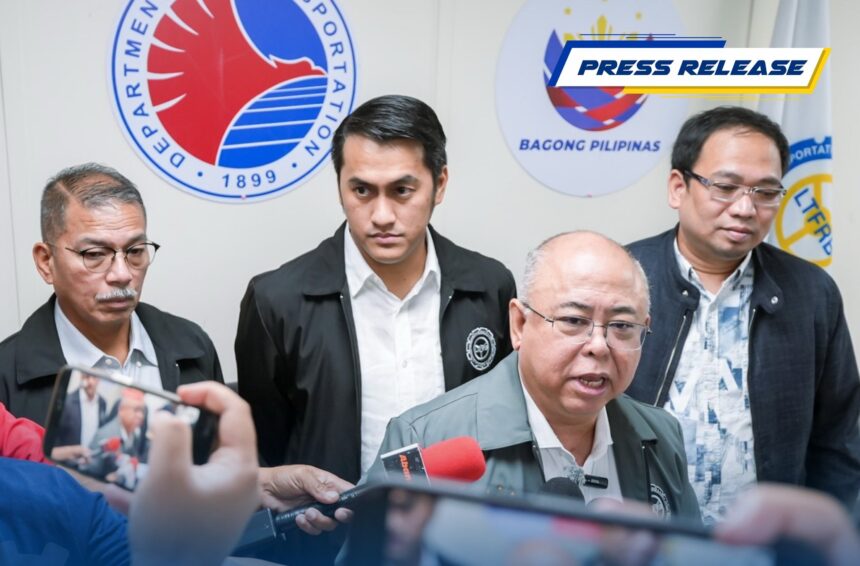
The Land Transportation Franchising and Regulatory Board (LTFRB) has approved fare increases for jeepneys, buses, airport taxis, and Transport Network Vehicle Services (TNVS) to help operators cope with rising fuel costs, Chairman Vigor D. Mendoza II announced on Tuesday, March 17.
Traditional jeepneys will charge a minimum fare of ₱14, up from ₱13, with the per-kilometer rate raised to ₱2.00 from ₱1.80. Modern jeepneys will increase their minimum fare to ₱17 from ₱15, while the per-kilometer rate rises to ₱2.30.
Airport taxis’ flag-down rate will jump by ₱40 to ₱115 for the first 500 meters, though succeeding charges remain unchanged.
TNVS services will also see adjustments, with base rates rising by ₱20 across all categories and a ₱15 pick-up fare per kilometer.
Flag-down rates are now ₱65 for sedans, ₱75 for AUVs, ₱55 for hatchbacks, and ₱165 for premium units. Despite these increases, per-kilometer and per-minute charges remain the same.
Metro Manila and city ordinary buses will now charge ₱15 for the first five kilometers, a ₱2 increase, with the per-kilometer rate adjusted to ₱2.49.
Air-conditioned city buses’ base fare will rise to ₱18, while their per-kilometer rate has climbed to ₱2.98.
Provincial buses also face fare hikes, with ordinary units charging ₱12 for the base fare. Per-kilometer rates are set at ₱2.20 for ordinary, ₱2.45 for air-conditioned and deluxe, and ₱3.35 for luxury buses.
Mendoza explained that the adjustments represent a 19% overall fare increase nationwide.
He highlighted that operational expenses for bus companies surged from 7.54% in 2022 to over 54.29% in 2024.
With the increased fare, a Manila–Baguio trip will cost ₱542, up from ₱469, generating about ₱3,650 in additional income per trip for a 50-seater bus. This helps offset fuel costs, which could rise by nearly ₱5,000 if diesel prices increase by ₱20 per liter.
The new fare adjustment will take effect on Thursday, March 19, according to LTFRB.
Petitions for fare hikes for ordinary taxis and UV Express units remain under deliberation.
Despite the rollout of a ₱5,000 fuel subsidy, the LTFRB maintained that fare adjustments are essential to sustain transport operations. (Odralim Villarez)