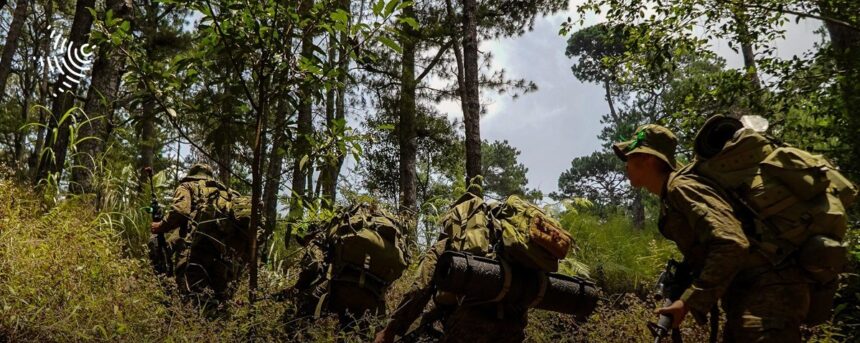
The Armed Forces of the Philippines (AFP) on Tuesday, May 12, condemned the use of dehumanizing language on social media, where fatalities from a military encounter in Toboso, Negros Occidental were referred to as “corned beef.”
Public scrutiny continues over the deaths of 19 people, now known as the “Toboso 19,” whose remains showed signs of poor handling, according to initial findings by forensic pathologist Dr. Raquel Fortun.
“The AFP does not condone disrespectful or dehumanizing language towards any individual, regardless of affiliation,” AFP spokesperson Francel Margareth Padilla said when asked about the comments circulating online.
“So we remind the public that every loss of life is a serious matter, and discussions surrounding armed conflict should remain respectful, responsible, and grounded in facts,” she added.
Padilla emphasized that the military should not be associated with language critics said stripped the dead of dignity.
“Sa bawat sitwasyon po, tayo ay patuloy na pinalalahanan na ang bawat pagkawala ng buhay ay hindi lamang numero. Ito ay isang seryosong usapin na dapat tratuhin nang may dignidad at paggalang,” she said.
“At the end of the day, any human life lost should be respected,” she continued.
Fortun’s Preliminary Findings Earlier, Fortun disclosed her initial forensic findings on five of the 19 fatalities from the April 19 encounter between suspected NPA rebels and the military in Barangay Salamanca, Toboso.
She said the bodies appeared to have been “poorly handled” and questioned the military’s account that the deaths resulted from a legitimate clash.
Padilla stressed that Fortun’s observations were still preliminary.
“At this stage, we emphasize that the findings presented are preliminary in nature, and we caution against drawing premature conclusions while the investigation and validation process is ongoing,” she said.
Responding to Fortun’s query about gunshot wounds found on victims’ backs, Padilla explained that the site was an active combat zone.
“Encounters are highly fluid and unpredictable. Combatants may maneuver, reposition, retreat, or take cover while the exchange of fire is ongoing,” she said.
“Wound trajectories alone, without complete reconstruction of the incident and validation of all evidence, do not automatically establish intent or wrongdoing,” she added.
The AFP noted that the encounter site was opened to investigators from the Philippine National Police–Scene of the Crime Operatives (PNP‑SOCO), “showing that the AFP is open to any investigation.”
One of Fortun’s most troubling findings involved a woman shot four times, three of which were non‑fatal.
The fatal wound struck her leg, hitting an artery and vein, causing her to bleed to death. Fortun questioned whether the military failed to see or refused to assist the wounded individual.
Asked if leaving a wounded person behind could constitute a war crime, Padilla said it was too early to conclude wrongdoing.
“Our troops on the ground are trained and well aware of international humanitarian law, our rules of engagement, and human rights,” she said.
Meanwhile, the Philippine Army disputed claims that soldiers mishandled the bodies.
“We respect the expertise of Dr. Fortun. As to the activities after the encounter, it was the Philippine National Police SOCO who processed and documented the cadavers at the site,” Army spokesperson Col. Louie Dema‑ala said.
“After the encounter, we did not touch the bodies. The Philippine Army allowed SOCO to cordon the area to ensure proper documentation and procedures,” he added. (Martin Sadongdong)