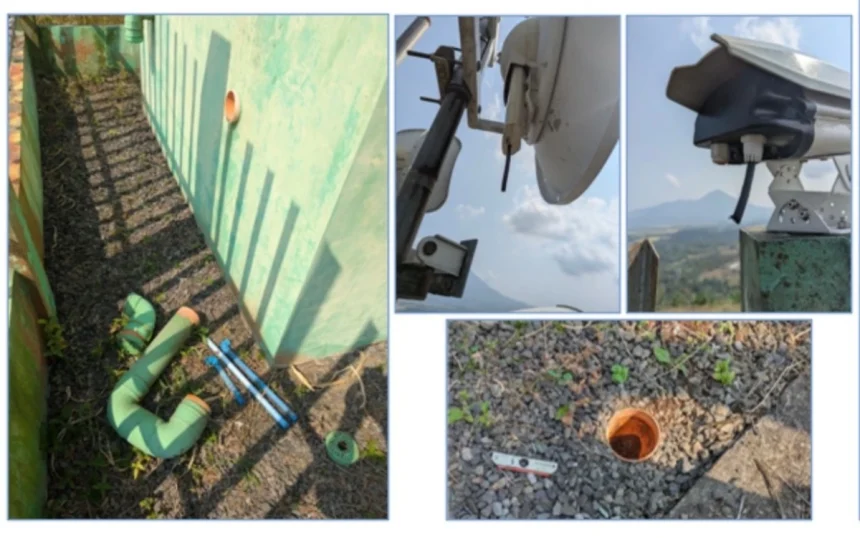
A volcano monitoring station in Ligao City, Albay, has been rendered non-operational after its cables were cut and stolen, the Philippine Institute of Volcanology and Seismology (Phivolcs) said on Tuesday, April 21.
The damage was discovered on April 19 during a routine maintenance check by personnel of the Mayon Volcano Observatory.
Phivolcs reported that the Ligao Observation Station (VMLI) in Barangay Paulog lost key power and communications components, including solar panels, batteries, conduits, and LAN cables.
“These items are essential to VMLI’s autonomous power generation, supply and storage, and real-time volcano monitoring data communications,” the agency said.
The station plays a critical role in monitoring Mayon Volcano’s activity using seismic and infrasound sensors.
“VMLI operates broadband seismic and infrasound sensors for the critical recording of a wide range of volcanic earthquakes and explosions from Mayon, an IP camera for visual monitoring from the west side of the volcano, and power and communications equipment,” Phivolcs added.
Commissioned in 2019, the facility has been instrumental in tracking Mayon’s activity during its 2023 eruption and the ongoing unrest this year. It is also part of a wider monitoring network along the Philippine Fault Zone in Bicol.
Phivolcs emphasized that any interruption in monitoring stations affects its ability to deliver timely and accurate hazard information, as close surveillance of Mayon’s activity remains crucial.
Mayon Volcano is currently under Alert Level 3, which indicates intensified magmatic unrest and the continued possibility of hazardous eruption scenarios. It has been under this alert status since January 6.
Citing Republic Act No. 10344, or the Risk Reduction and Preparedness Equipment Protection Act of 2012, Phivolcs reminded the public that “the unauthorized taking, stealing, keeping, or tampering of government risk reduction and preparedness equipment, accessories, and similar facilities” is punishable under the law.
The agency urged local communities to help safeguard monitoring stations and called on the public to report any information that may help identify those responsible. (Ellalyn De Vera-Ruiz)