By GENALYN KABILING

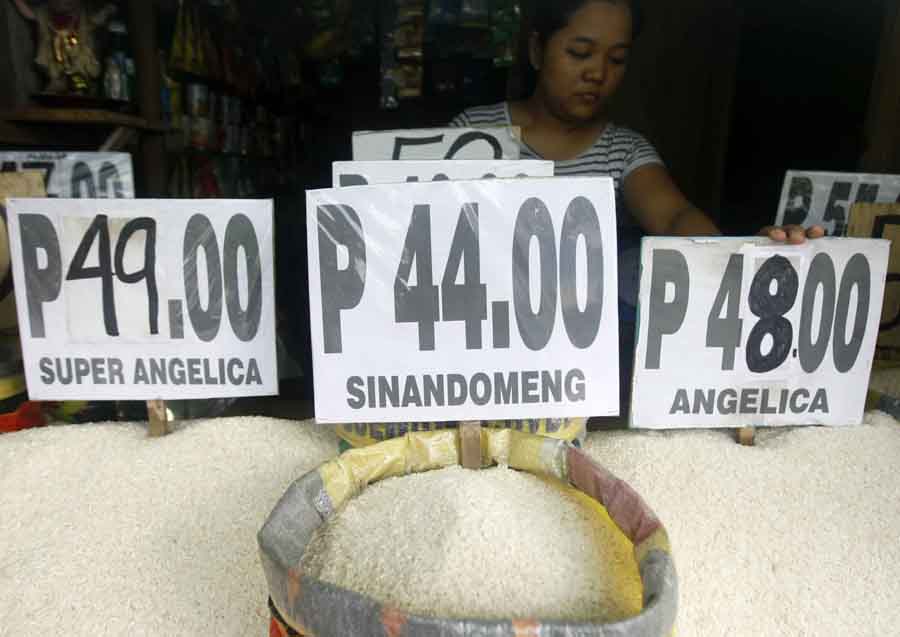
IT will be a “free market for rice” in the country after President Duterte has authorized the “unimpeded” importation of rice to boost supply and lower prices.
The latest decision to liberalize rice importation was reached by the President following a “principled and fierce” discussion in the Cabinet meeting last Monday, according to Presidential spokesman Harry Roque.
“The President approved unimpeded importation of rice as a measure to reduce inflation,” Roque said during a Palace press briefing, after the economic team recognized that food prices were primarily responsible for the recent inflation spike.
“He wants to flood the market with rice so that even if the price of crude and other oil prices should up still further, that the people will have access to affordable rice,” he said.
With the lifting of the rice import quota system, Roque said the big private companies like San Miguel Corporation could now import rice as much as they can as long as they pay the proper tariffs.
Upon the orders of the President, he said the National Food Authority (NFA) no longer has the power to accredit who can import as well as to determine how much rice to import.
“Anyone who can afford it and will pay tariffs for rice will be allowed to import rice,” he said.
“Wala na pong restrictions ngayon basta magbayad lang ng taripa at gagamitin natin ang taripa para sa mga Pilipino magsasaka,” he said.
Roque admitted that the rice importation was a “very hot issue” during Cabinet meeting but denied there was a shouting match among some officials who supported and opposed to the proposal.
Asked if tempers flared in the meeting, Roque said: “Close…I don’t think it was a shouting match. I think it was just people being assertive about their views.”
He said there was “a principled and fierce” discussion about the current rice importation system and possible solution to the problem. He noted that the President listened to the insights from the Cabinet and decided in the end to liberalize rice imports.
“It was highlighted that minimum access volume is minimum. There was no maximum and that’s why the decision to liberalize for all intents and purposes the importation of rice was really the ultimate means by which to rein in inflation as far as food items are concerned,” he said.
Asked if Finance Secretary Carlos Dominguez and Agriculture Secretary Emmanuel Piñol were at odds during the meeting, Roque declined to give details citing executive privilege.
“There was a thorough discussion of the issue and after presenting all the issues, the President decided to fully liberalize the importation of rice,” he said.
Roque admitted the government would still push for the rice tariffication bill in Congress “but we will not wait for it.”
“In effect, we did not wait for tariffication,” he said about the President’s decision to liberalize rice importation.
“The consensus was there was no need for anything. the President can already order the liberalization of rice importation because again the language found in relevant instruments is minimum access volume so there is no maximum,” he said.
He added that there was no timeframe set for the unimpeded rice importation.