By Argyll Geducos
President Marcos said his administration is reducing discretionary powers in government and expanding digitalization to strengthen safeguards in managing public funds and prevent corruption and waste.
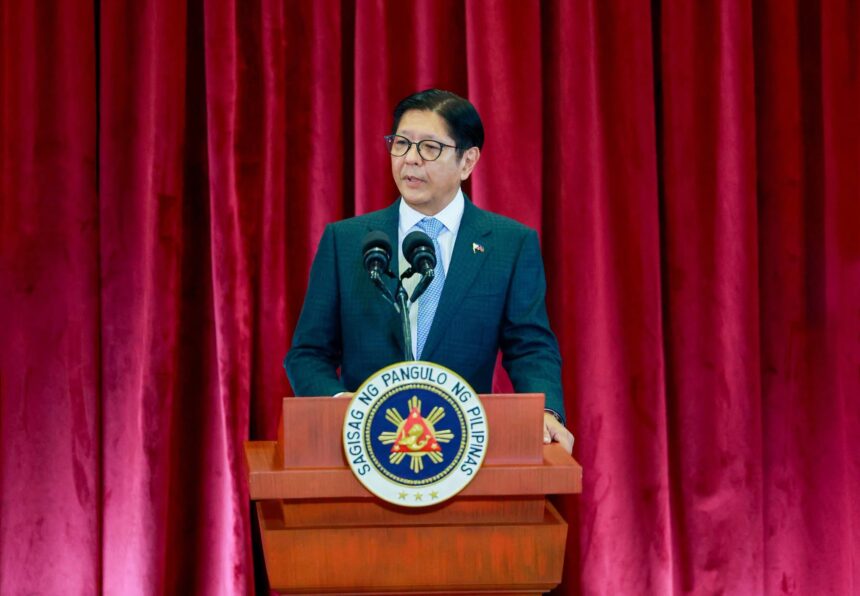
Speaking at the traditional Foreign Correspondents Association of the Philippines (FOCAP) Presidential Luncheon in Manila, the President lamented that oversight mechanisms were not being properly observed or implemented.
“Many of these oversight measures were actually in place. They were just not being respected or used,” Marcos said Friday, Aug. 14.
He explained that excessive discretion among government officials had been identified as an urgent concern, noting that decision‑making authority had been delegated to lower levels of the bureaucracy.
“And we noticed that discretion has gone lower and lower in the administration until rank‑and‑file members are making decisions worth billions of pesos,” he said.
Such decisions, he warned, could fall into a “very gray area” and, in some cases, be “absolutely and totally illegal.”
“That is one of the measures we have put in: to remove that discretion,” Marcos said, adding that excessive discretionary authority is “where the corruption comes in.”
According to him, unchecked discretion could allow officials to demand money or enter into arrangements in exchange for favorable decisions.
“If I, let us say, a functionary, can make big decisions, then I can ask for money and say, I will decide it in your favor if you give me money,” he said.
Marcos identified digitalization as the administration’s “most powerful tool” for reducing human intervention in government processes and limiting opportunities for corruption and waste.
“Digitalization is our most powerful tool for that because we remove that human element where wastage and corruption can creep in,” he said.
One initiative is the use of blockchain technology for the 2026 national budget.
The Department of Information and Communications Technology (DICT) said the system, called the Digital Bayanihan Chain, is designed to provide a permanent, tamper‑proof digital record of the budget and eventually cover the entire cycle from approval and spending to disbursement and reporting.
DICT Secretary Henry Aguda earlier described the blockchain system as a “digital seal of truth” that would allow citizens, auditors, researchers, and future administrations to verify official budget records even years later.
Marcos had previously said blockchain could help address transparency problems in government spending, noting in a podcast interview last year: “Blockchain is something that could work,” while stressing that existing rules must still be followed.
The President has also tightened safeguards over the 2026 budget, vetoing nearly ₱92.5 billion in Unprogrammed Appropriations and warning that such funds should not serve as a “backdoor for discretionary spending.”
He said their release must be subject to clearly defined triggers and careful validation.
Marcos emphasized that the administration will continue improving government processes to ensure discretionary authority is not abused and that public spending and projects are implemented more safely and equitably.