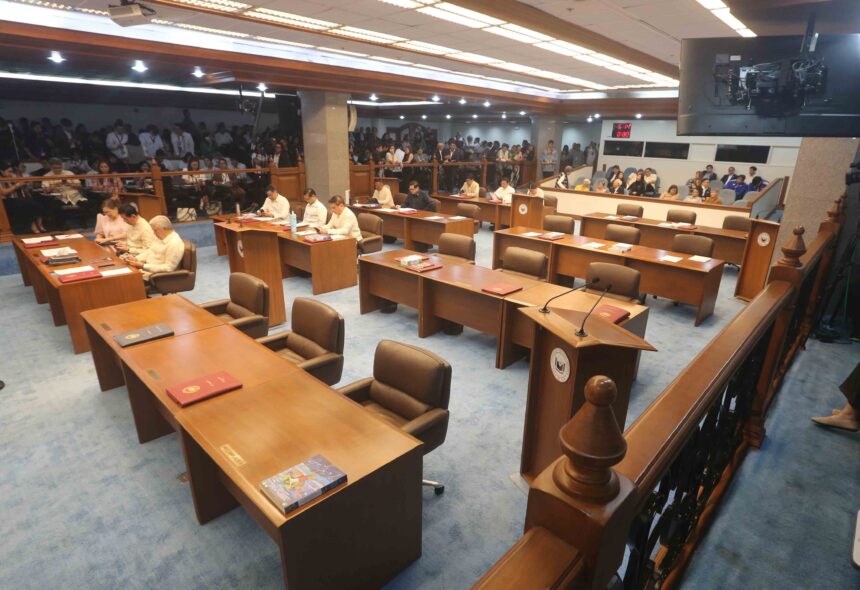
The Senate’s plenary session on Monday, June 1, failed to commence after no senator from the majority bloc appeared in the session hall, including Senate President Alan Peter Cayetano, who was expected to preside.
The session was scheduled to begin at 5 p.m., but only members of the minority bloc, known as the “Solid Bloc 11,” were present. By 6 p.m., an hour after the scheduled start, no majority senator had arrived, raising doubts about whether the chamber could convene.
At around 7:05 p.m., members of the minority bloc began leaving the hall. “Wala na eh, di na dadating eh,” Sen. Juan Miguel “Migz” Zubiri said, noting that in his 14 years in the Senate, it was the first time he had experienced the presiding officer failing to appear.
Zubiri criticized the absence as a form of protest, asking, “Bakit naman naka-hostage yung trabaho ng Senado?” He stressed that the minority bloc was ready to work, while Senator Erwin Tulfo called the incident another waste of taxpayers’ money.
In a statement, Cayetano urged the minority bloc to join what he described as a collective stand for the Senate’s independence amid tensions over leadership and alleged external pressures.
His remarks came after the Sandiganbayan Fifth Division issued a warrant of arrest against Sen. Jinggoy Estrada, a majority bloc member, on plunder and graft charges linked to the flood control scam.
Cayetano emphasized that the Senate is a co‑equal branch of government and “not a prize to be claimed” by any political faction.
He warned against allowing the institution’s independence and the legal standing of its members to become bargaining chips in political struggles.
He then challenged senators to take a stand on what he called a test of the chamber’s autonomy, proposing a “deliberate act” of letting the Senate “go quiet” as a form of protest to highlight external interference. (Dhel Nazario)