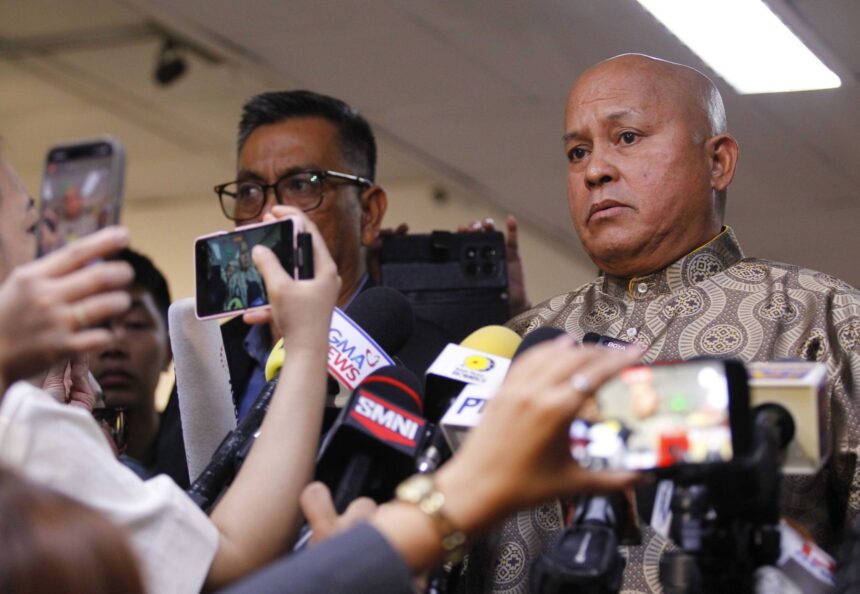
Senator Ronald “Bato” dela Rosa told the Supreme Court (SC) that his plea to stop the enforcement of the arrest warrant issued by the International Criminal Court (ICC) does not mean he is claiming exemption from legal accountability.
“Any accountability, should there be any, must be grounded in law, including when the government is the party seeking,” Dela Rosa said in his reply to the comment filed by government lawyers. He clarified that he is not asking the SC to acquit him.
He stressed that before any Filipino citizen is seized on Philippine soil pursuant to a foreign or international process, such process must first be made enforceable under Philippine law and subjected to prior judicial determination, as required by Article III, Section 2 of the Constitution.
“No foreign tribunal, no executive department, and no international body is the final and authoritative voice on what Philippine law requires within Philippine territory,” he pointed out.
In his reply filed on May 18, Dela Rosa asked the SC to issue a temporary restraining order (TRO) to immediately stop the enforcement of the ICC’s arrest warrant.
He also sought to bar the DOJ, DILG, and law enforcement agencies from arresting or surrendering him based on any ICC warrant, Interpol notice, or foreign directive, absent a valid warrant issued by a Philippine court.
The Office of the Solicitor General (OSG) opposed the plea, urging the SC to direct law enforcement agencies to enforce the ICC warrant.
The OSG branded Dela Rosa a fugitive from justice, citing his alleged pattern of hiding since November 2025 when news of the warrant first surfaced.
Dela Rosa countered that labeling him a fugitive prematurely prejudges the case.
He argued that his actions—continuing to participate in public affairs, invoking judicial remedies, and remaining visible—are inconsistent with fugitive behavior.
He reminded the SC that the Philippines withdrew from the Rome Statute in March 2019, noting that the ICC investigation and subsequent warrant were authorized only after the withdrawal had taken effect.
“Respondents must therefore identify a present domestic legal source of authority. They identify none,” he said. (Rey Panaligan)