CALATAGAN — Renato Dolosa, the 1992 and 1995 Marlboro Tour champion from Gubat, Sorsogon, and Carlo Guieb, the back-to-back titlist in 1993–94 from Bagabag, Nueva Vizcaya, were among the legendary riders who ruled the roads during the summer races of the early ’90s.
Guieb could have won three — including the 1991 edition. He held a slim lead heading into the final stage, an individual time trial that many believed would be a victory lap for the taciturn Novo Vizcayano, widely regarded as the Tour’s premier mountain climber.
But a rider from San Nicolas, Pangasinan — Bernardo Llentada — had other plans.
Flagged off second to last, Llentada unleashed a stunning ride on a state-of-the-art bike with aerodynamic handlebars and a rear disc wheel. He overcame the deficit and stole the Tour title in spectacular fashion.
It was a feat reminiscent of American Greg LeMond’s dramatic victory in the Tour de France two years earlier, when he used similar cutting-edge equipment to erase Frenchman Laurent Fignon’s 50-second lead in the final stage time trial to Paris.
For years after, Llentada was hailed as the country’s version of LeMond.
Back then, in the old Tour, sportswriters in sandos and shorts would drop everything to join the grueling two-week cycling caravan — braving the scorching midday sun, choking dust, and bone-jarring rides aboard passenger jeepneys over long, rugged roads from one stage to the next.
The experience was both exhausting and exhilarating, especially for rookie reporters. It was a rite of passage — a badge of courage earned upon completion, as the now-seasoned scribes returned home like conquering heroes.
The action was relentless, the drama unfolding with every stage. Stories of triumph and heartbreak flowed from those who covered the race up close.
The true heroes, of course, were the cyclists — coming from the far north to the deep south: newsboys, mechanics, drivers, farmers — all carrying stories of humble beginnings and dreams of modest fame and fortune.
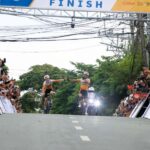
Dolosa and Guieb, now serving as commissars and technical directors in the revived MPTC Tour of Luzon 2026, which kicked off Wednesday in Calatagan, Batangas, stand as living proof of the event’s enduring heritage. They also serve as a bridge to its international era, which began in 1997 — the first time Philippine cycling received recognition from the Union Cycliste Internationale, signaling a new chapter for the sport.
Gone are the days of passenger jeepneys as media vehicles. Today, the press and photographers cover the Tour in comfort, aboard air-conditioned vans. The time of heavy steel bikes is also over, replaced by high-modulus carbon fiber and titanium machines that cost a small fortune and fly like the wind.
With prestige and bigger prizes came stronger international competition. Hong Kong’s Wong Kam-po, a five-time Olympian, ruled in 1997 — a year before the old Tour folded — while South Korea’s Dae Yeong Joo emerged victorious in the inaugural MPTC Tour in 2025.
Local cyclists today face a tougher challenge. But they can draw inspiration from legends like Dolosa and Guieb, who blazed the trail for them to follow.