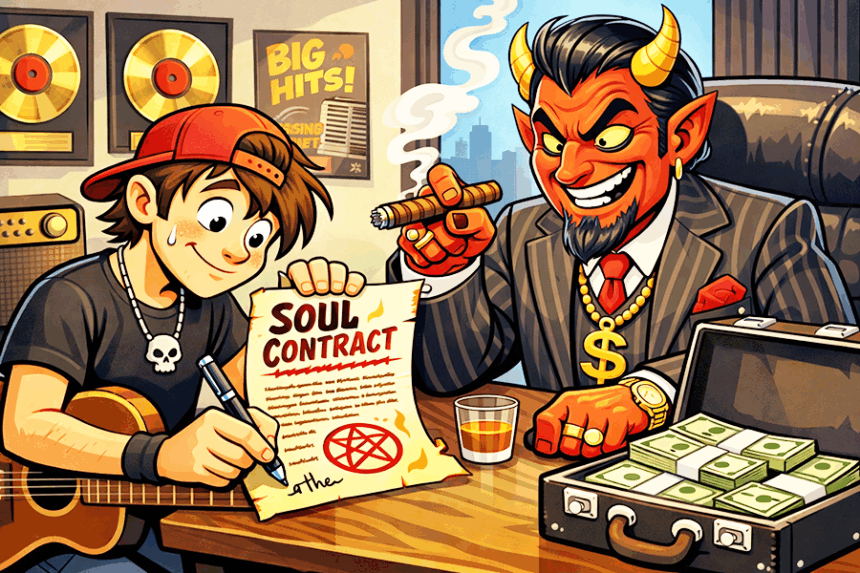
For all the talk about supporting OPM, many artists still feel less like musicians and more like merchandise. Labels discover a fresh face, polish the brand, push a few viral hits, then cash in while the streams are hot. Creative freedom and fair royalties often feel like optional add-ons.
Case in point: the public fallout between rising singer-songwriter mrld and O/C Records, the label run by Kean Cipriano.
Mrld recently declared she’s now independent, saying she opted out of her contract with O/C Records after allegedly receiving only 5% in royalties from songs she claims she wrote and produced herself. The label quickly pushed back, insisting the contract remains valid.
The irony is thick. O/C Records was once framed as a more “artist-friendly” alternative to the traditional music-industry machine. Yet the dispute now looks like the same old drama: contracts, control, and artists discovering the fine print isn’t exactly poetry.
Labels argue they invest heavily—production, promotion, distribution. Fair enough. But when the artist writes the song, performs it, builds the fanbase, and still ends up with the smallest slice of the pie, it’s hard not to question the system.
It reminds me of a chance encounter in the mid-’90s with a rock legend—one of OPM’s supposed pillars—in Cubao.
He looked furious, so I asked why. He had just come from his record company to collect royalties after months of waiting. He thought letting the payments pile up might make the trip worthwhile.
He was wrong.
The check came to a grand total of ₱250.
OPM has never lacked talent. What it may lack is an industry willing to acknowledge the obvious: artists aren’t products. They’re the reason the product exists.