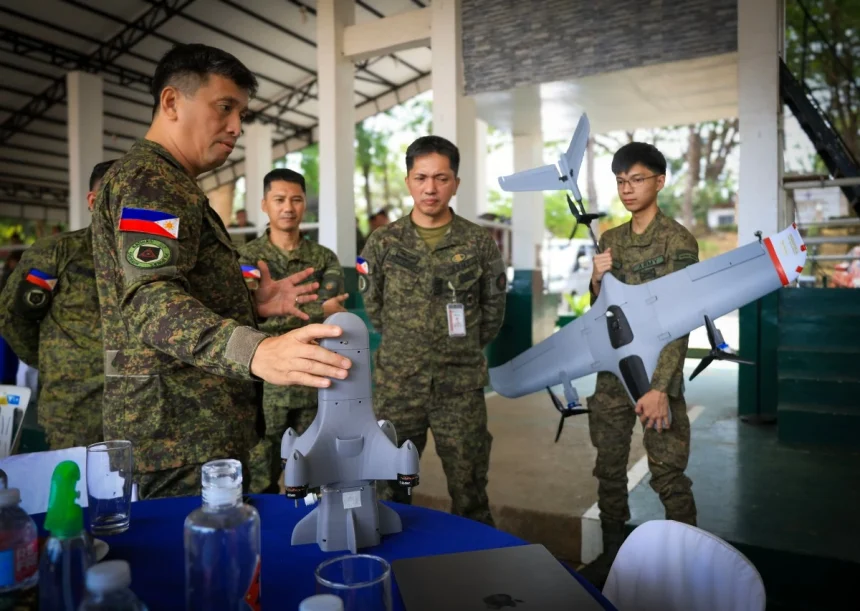
The Philippine Army (PA) is intensifying its push into drone warfare, highlighting the critical role of technology in shaping future conflicts.
Army leaders stressed that forces unable to adapt risk being left behind on the battlefield.
Major General Ramon Zagala, commander of the 2nd Infantry Division (2ID), underscored this during the Drone Racing Fellowship 2026 held on Saturday, May 16, at Camp Capinpin in Tanay, Rizal.
The event showcased the Army’s growing investment in unmanned aerial systems and their integration into military training.
Elite units including the First Scout Ranger Regiment, Special Forces Regiment (Airborne), Light Reaction Regiment, Reserve Command, and Explosive Ordnance Disposal teams participated in drone maneuvering exercises.
Pilots navigated aerial obstacle courses designed to test precision, control, and rapid decision-making under pressure.
“Tomorrow’s operations will demand not only courage in the field, but also adaptability in technology. We must continue learning, evolving, and preparing our personnel for the changing operational environment. If we will not adapt, we will fail,” Zagala said.
The Army emphasized that drones are no longer optional tools but essential assets for reconnaissance, surveillance, targeting, and battlefield coordination.
Lessons from conflicts in Ukraine and the Middle East have shown how affordable unmanned aerial systems can disrupt traditional tactics and redefine combat operations.
In recent years, the Armed Forces of the Philippines (AFP) has expanded its use of drones for intelligence gathering and internal security missions against insurgent groups.
Army units have deployed drones to monitor remote terrain, enhance situational awareness, and support combat operations without exposing troops to direct danger.
“Drone technology is already here. Future wars will be fought with it, and our ability to harness it will provide a differentiation,” Zagala added.
The Drone Racing Fellowship 2026 forms part of the Army’s broader effort to strengthen internal security gains while preparing troops for external defense missions and the evolving demands of modern warfare. (Martin Sadongdong)