“Words, don’t come easy…”
F.R. David’s 1982 hit might as well be Senator-actor Robin Padilla’s theme song of the moment failing to convey what he actually meant during a recent Senate hearing.
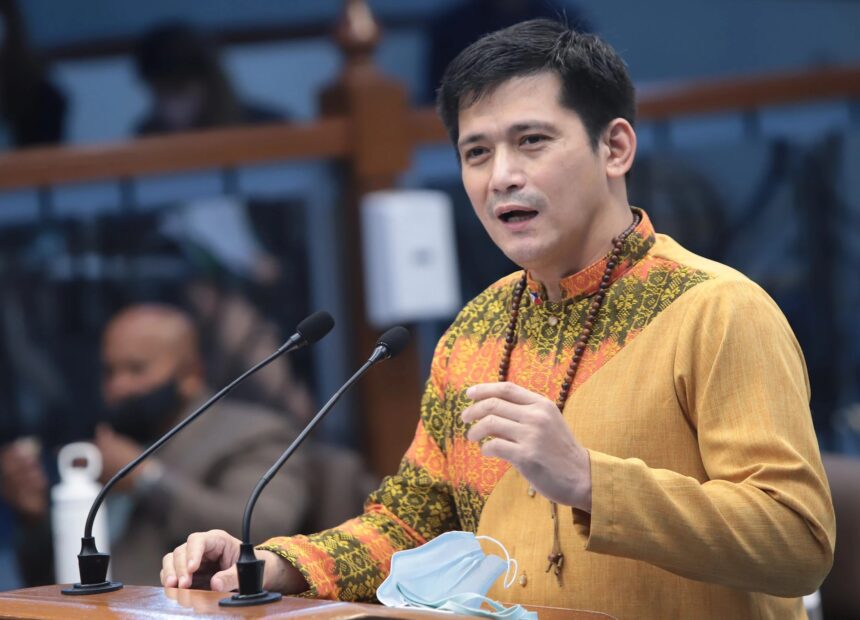
Presiding over a Senate Committee on Public Information and Mass Media hearing tackling the proposed Children’s Safety in Social Media Act, a bill aimed at protecting minors in digital spaces, Padilla, made a generational comparison that quickly went viral.
He said, “Noong panahon namin, hindi uso ang depression… Ngayon batang maliit sasabihin ‘I’m depressed.’”
He didn’t stop there.
Seemingly on a roll, he went on to label some members of the younger generation as “weak” or mahihina, contrasting them with people from his era whom he described as “hindi iyakin.”
Just like that, he was topic on social media anew.
The statement drew criticism from netizens and mental health advocates, many of whom pointed out that depression and other mental health conditions are legitimate medical concerns — and that increased awareness today is not a sign of weakness but progress.
As the backlash grew, Padilla issued an apology of sorts, clarifying that his remarks were not meant to ridicule children or dismiss mental health struggles. Rather, he said his comments were meant as an observation on generational differences, particularly how social media exposure may be shaping young people’s emotional experiences.
Still, reactions remained mixed. Supporters defended the senator, saying he was simply expressing concern over resilience among the youth. Critics, however, argued that public figures, lawmakers in particular, must be more conscientious when discussing mental health, given its sensitivity and real-world impact.