If you’re drawn to tearjerkers and courtroom dramas, “Unmarry” makes a compelling case for your attention.
An official entry to this year’s Metro Manila Film Festival (MMFF), “Unmarry” follows the parallel stories of two couples navigating the painful, often complicated terrain of failing marriages.

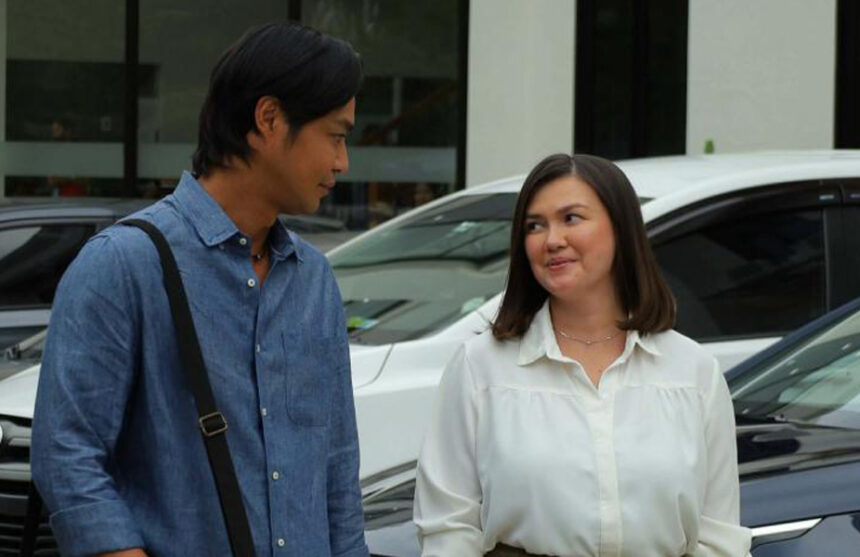
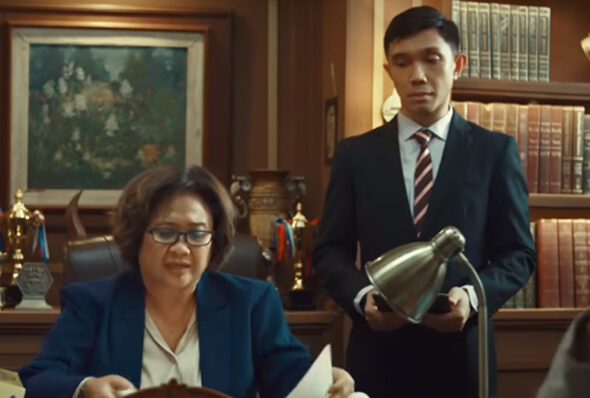
At the center are Celine (Angelica Panganiban) and Ivan (Zanjo Marudo), two strangers whose lives intersect inside the office of annulment lawyer Atty. Jacqueline Lambridas (Eugene Domingo).
Celine seeks to have her marriage to Stephen (Tom Rodriguez) annulled, citing emotional and physical distress. Stephen, however, refuses to let go—not out of romance, it seems, but out of practicality. Coming from wealth, he financed Celine’s dream of opening a namesake bakeshop, which has since grown into a flourishing business empire. Their marriage, for him, is as much an asset as it is a personal bond.
Ivan’s situation mirrors Celine’s in spirit, if not in circumstance. A failed artist struggling with alcoholism, Ivan finds himself on the brink of separation from his wife Maya (Solenn Heussaff), who now manages most of their family’s finances. Maya wants out; Ivan wants to try again, clinging to the hope of salvaging their marriage for the sake of their son, Elio (Zac Sibug). Ivan is painfully aware of his shortcomings, yet his pleas for redemption feel sincere rather than self-pitying.

As expected in narratives such as this, Celine and Ivan gradually form a connection. Their bond grows not out of melodrama, but shared vulnerability and quiet understanding. It is a relationship born of mutual sadness, handled with restraint and emotional honesty.
What makes “Unmarry” particularly effective is its writing. The screenplay offers a straightforward, unvarnished look at a question many Filipinos continue to grapple with: what happens when love is no longer enough to sustain a marriage? While the subject matter is heavy, the film smartly avoids sinking into oppressive drama. There are moments of humor, gentle and well-placed, that keep the story grounded and accessible. Mercifully, the film resists the histrionics that often plague local romantic dramas.
Director Jeffrey Jeturian approaches the material with calm introspection. He does not force conclusions or emotional cues, instead allowing the audience to absorb the story at its own pace. This measured direction gives the performances room to breathe.
Panganiban marks a strong return to cinema. Despite her long absence, she slips back into form with ease, delivering a performance defined by quiet ache and longing. While not showy or transformative, her portrayal of Celine feels natural and deeply convincing—as if she never left.
Marudo, on the other hand, appears uneven in some scenes, occasionally seeming adrift. Still, his Ivan remains relatable and sympathetic. His courtroom scene, in particular, where he justifies his determination to fight for his marriage, is quietly affecting and earns genuine empathy.
Heussaff delivers one of her best performances to date. Her Filipino dialogue is confident, her emotional restraint commendable. Even in moments without spoken lines, her expressions communicate volumes.
Domingo, unsurprisingly, steals every scene she’s in, providing warmth, humor, and gravitas in equal measure.
Special mention must be given to Sibug, who is remarkably convincing as Elio. His performance drew audible praise from audience members, with some even suggesting award consideration for his debut.
Strong supporting turns from Donna Cariaga, Shamaine Buencamino, Nico Antonio, and Angel Aquino round out the cast.
A co-production of Quantum Films and Cineko Films, “Unmarry” is a film for the lovelorn and the sentimental. It speaks not only to those trapped in unhappy marriages, but to anyone who has ever fallen in love and, inevitably, faced the complexities that come with it. As most of us have.