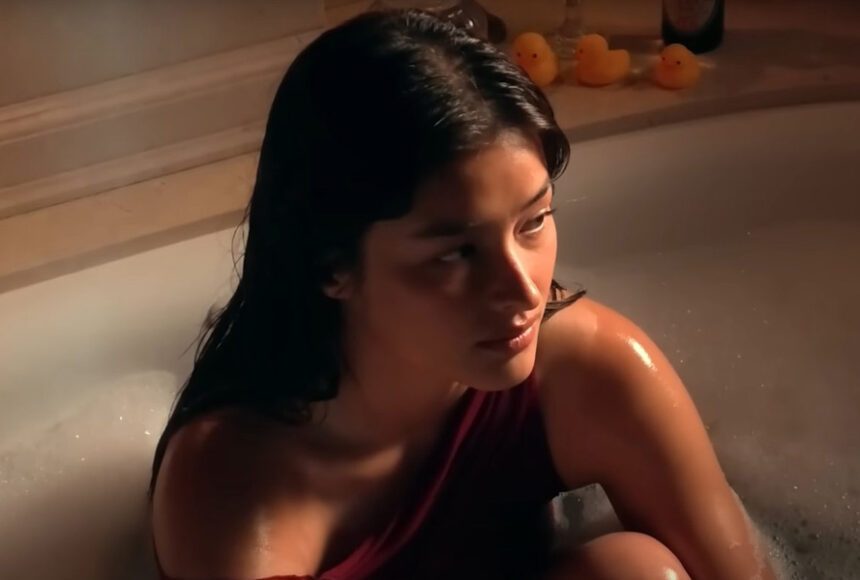
What price beauty? What price fame?
Liza Soberano has chosen to speak. Not in the delicately curated way stars often do, but in a raw, almost brutal manner.
On Sarah Bahbah’s Can I Come In? podcast, Liza laid out a childhood scarred by neglect, abuse, and shame. She spoke of a mother addicted to crystal meth, a father in legal trouble, and years in foster care where, she says, she was demeaned, even forced to clean dog feces with her tongue.
People squirmed.
These aren’t the confessions of a star hellbent on polishing her image — these are the kind that strip away glamour, leaving only the uneasy truth. And in a country that both worships and devours its celebrities, such candor is a double-edged sword.
As expected, social media lit up—some applauding her courage, others rolling their eyes at the timing.
The harshest voices accuse her of painting herself as a victim to keep the public gaze fixed on her. The court of online opinion has little patience for nuance; either you’re brave for speaking out, or you’re calculating for speaking now.
Her story, however, forces us to confront something bigger than the entertainment cycle. Child abuse—no matter whose child—thrives in silence. That Liza can speak of it at all says less about strategy than about survival.
But around these parts, celebrity revelations are never just personal; they’re inevitably measured against box-office receipts, fan wars, and gossip feeds. Which is why, in the middle of telling her truth, she also had to navigate the inevitable distraction: her breakup with Enrique Gil.
It was confirmation long whispered about in fan circles—yes, they ended in October 2022. She calls it “full of love,” the parting of lovers who no longer “matched.” In another context, it might have been the main headline. Here, it became a subplot in a larger drama, tangled with the question of whether she could—or should—step away from the love team mold without alienating those who adored her for it.
There is a peculiar cruelty in how the public treats its stars. The same audience that romanticized her on-screen pairing with Enrique now weighs her revelations against the image they built for her.
Speak out about abuse, and some will question your motives. Move on from a love team, and others will accuse you of betraying an unwritten pact. It’s as if fame comes with a contract you never signed but are forever bound to honor.
The truth is, Liza is navigating two unforgiving arenas at once—the lingering trauma of a childhood she didn’t choose, and the cutthroat politics of an industry that punishes women for aging out of their ingenue years.
Whether you believe her timing is personal catharsis or public calculation, the fact remains: she told her story, and in doing so, reminded us that abuse doesn’t stop at the gates of fame.
Now, what we do with that reminder—whether we turn it into tabloid fodder or a reason to talk about child protection laws, mental health, and the culture of silence—is up to us.
But perhaps the more uncomfortable truth is this: in the eyes of the public, survival is never enough. You must survive beautifully, marketably, and without making too much noise.
Liza has refused the last condition. And that makes her dangerous—in the best way possible.