Lawyer-producer Atty. Ferdinand Topacio isn’t one to mince words, especially when he’s convinced he has an actor who can do more with a stare than most can with a three-page monologue.
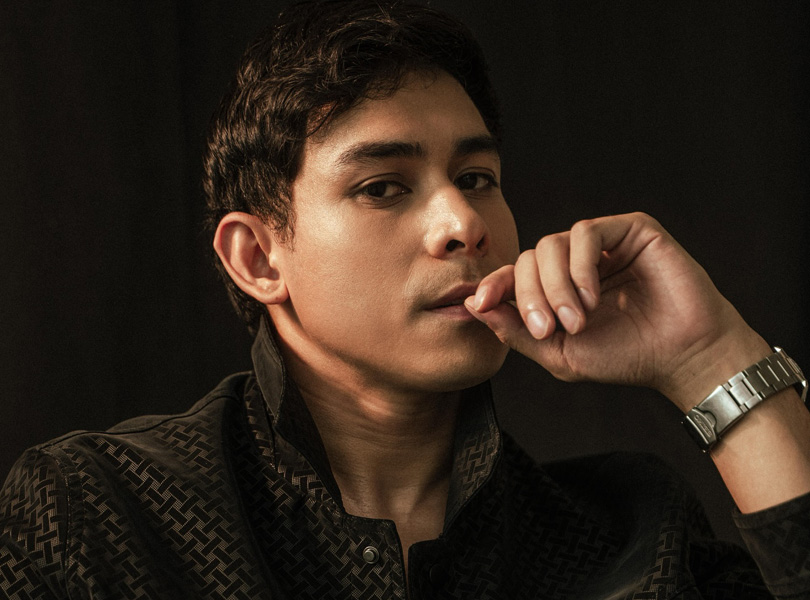
At a recent press conference for “Spring in Prague”, Topacio lavished praise on leading man Paolo Gumabao, calling him a rare kind of performer—one who can communicate entire emotional arcs without saying a single line.
“Hindi na niya kailangan magsalita,” Topacio said, only half-joking. Gumabao’s eyes, he noted, do most of the heavy lifting. A twitch here, a look there, and suddenly you know exactly what the character is thinking, feeling, and possibly regretting.
It’s this quiet intensity, Topacio explained, that keeps him repeatedly tapping Gumabao for his projects, including the earlier “Mamasapano”.
“Magaling si Paolo. I think he deserves more projects,” he emphasized—an endorsement that, coming from a producer-lawyer, sounded both artistic and contractual.
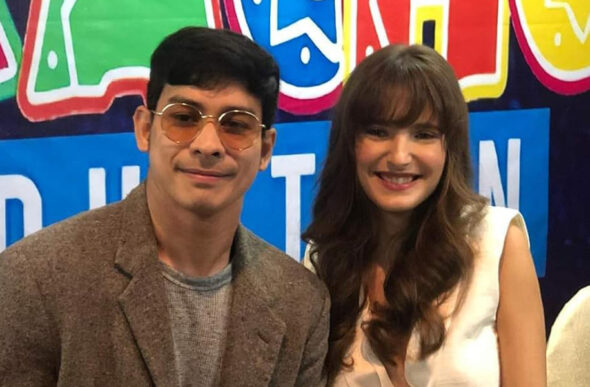
Gumabao, for his part, took the praise the way seasoned actors usually do: grateful but careful not to sound like he believes his own press releases.
“When I’m called for work, I always exert effort to do my best,” he said. “Of course I’m grateful and humbled. I’m happy that he appreciates my effort.”
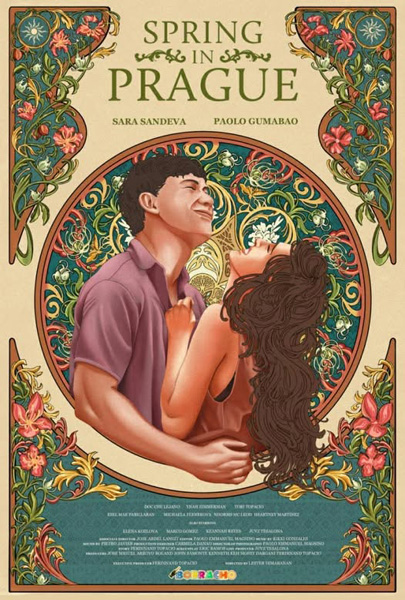
Effort, it seems, is very much the currency of “Spring in Prague”, a film that wraps a chance romance in history, ideology, and a fair amount of metaphor.
Produced by Borracho Films Production and directed by Lester Dimaranan, the film pairs Gumabao with Czech actress Sara Sandeva in a love story that hops continents and collides with political worldviews.
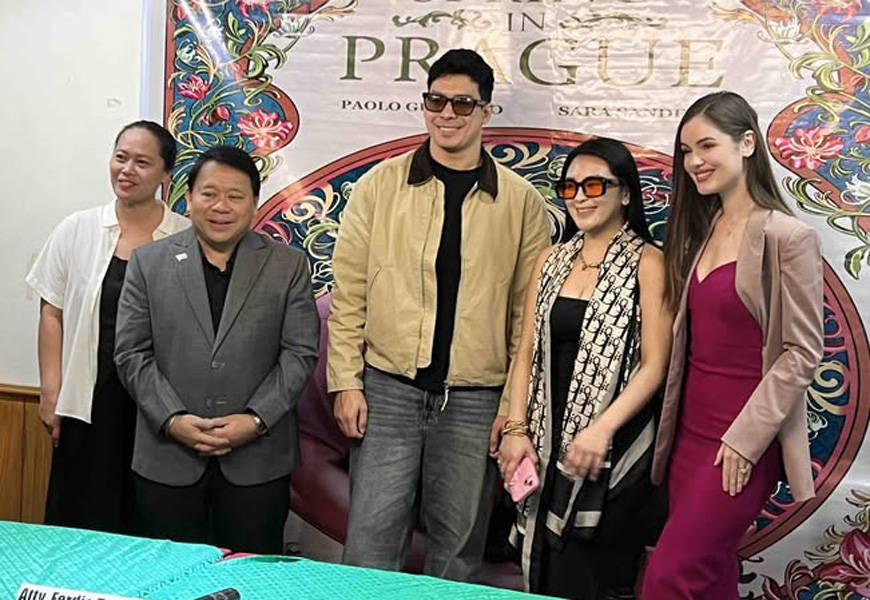
Gumabao plays Alfonso “Alfie” Mucho, a laid-back Filipino resort owner. Sandeva is Maruska “Marie” Ruzicka, a Czech model who flees to Southeast Asia to escape the suffocating grip of her powerful father.
Their romance blooms briefly in the Philippines before being abruptly cut short. Marie is summoned back to Prague under false pretenses, dragged once more into a world defined by control rather than choice.
According to Topacio, the story draws heavily from the events of the 1968 Prague Spring, when Czechoslovakia attempted to break free from Soviet domination—an uprising crushed by tanks and followed by years of renewed repression.
“That historical experience eventually led to the breakup of Czechoslovakia into two separate states,” Topacio explained, slipping into history professor mode. But he was quick to stress that the film isn’t just recounting events—it’s reimagining them through the film’s characters.
In “Spring in Prague”, the people are metaphors. Alfie represents the Philippines, a democratic state defined by personal freedom. Maruska, meanwhile, is the daughter of a man who—had communism not collapsed—would have ruled the Czech Republic.
Her father, Vilem Ruzicka, exaggerates her mother’s illness to force her return, then confines her at home, allowing only her closest friend Estrella to visit. One unsanctioned phone call is enough to send Alfie flying to Prague in the dead of winter, armed with little more than conviction and a belief that what they had was real.
Topacio noted that even the film’s structure follows symbolism, unfolding like the seasons.
“If you look closely, the dialogue goes beyond lovers talking,” he said. “It reflects democracy versus communism, freedom versus authoritarian rule. This is not a straightforward love story—it’s a fairy tale with political teeth.”
For Gumabao, one of the challenges was navigating the cultural and ideological differences between Alfie and Maruska.
“Despite these differences, they still come together and form a partnership,” he said—an observation that doubles nicely as both romantic takeaway and political thesis.
He also praised Dimaranan for fostering a collaborative set, open to ideas and discussions rather than rigid instruction.
Also in the cast are Elena Koslova, Marco Gomez, Yah Zimmerman, Jessy Vidal, and Sean Raval, with Abel Langit serving as associate director.
“Spring in Prague” opens in cinemas nationwide, Feb. 4.