In a watershed moment for Philippine cinema and global disability representation, the romance drama “I’mPerfect” was named Best Picture at the 51st Metro Manila Film Festival (MMFF) Gabi ng Parangal last Saturday at the Dusit Hotel in Makati City.
Produced by Nathan Studios and directed by Sigrid Andrea Bernardo, the film is the first mainstream Filipino feature to star two leads with Down syndrome—Krystel Go and Earl Amaba—in a romantic narrative.
“Inclusivity in one word that’s how I simply described this historic milestone for Philippine cinema,” Bernardo said. “I pushed for this film for several years since 2009, the first time I wrote the script. I thought nobody would produce the film. I thanked Nathan Studios for the fantastic opportunity.”
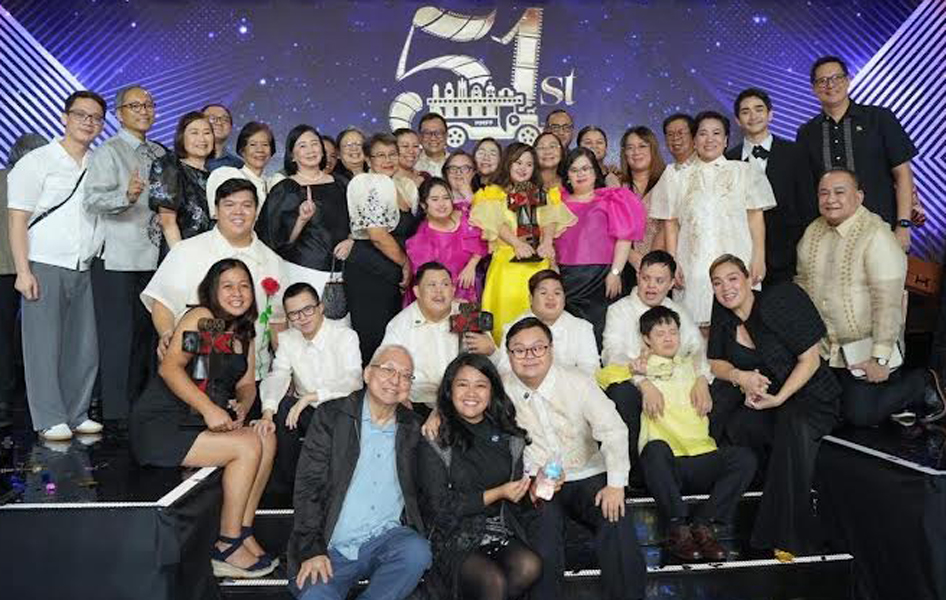
The victory marks a decisive shift in the industry, proving that inclusive storytelling can triumph over traditional box-office formulas.
Accepting the award for Best Picture, Director Sigrid Andrea Bernardo revealed the project powered by the CMB film services and VLTF Co Production was a labor of love.
She noted how it was rejected for its “risky” premise.
“I doubted myself, but I never gave up on them. It was a big reward that this film had already released in cinemas and saw them dancing on the stage, getting the attention they deserved and being interviewed is an absolute success,” she said.
Apart from the Best Picture trophy, “I’mPerfect” also won the Best Ensemble Performance (Special Jury Prize) award as with the Best Actress trophy for Krystel, a historic first for an actor with Down syndrome in the festival’s 51-year history.
“These awards are priceless, and they are the icing on cake. These are the rewards,” Bernardo added.
Executive Producer Sylvia Sanchez, who championed the project when others turned it away, was visibly emotional when she got up on stage.
In a poignant moment, she declared: “Persons with disability: you made history tonight.”
The victory of “I’mPerfect” is poised to ripple beyond local shores, offering a new benchmark for global cinema.
By casting neurodivergent actors to tell their own stories—rather than relying on neurotypical actors to mimic them—the film challenges international standards of authenticity and representation.