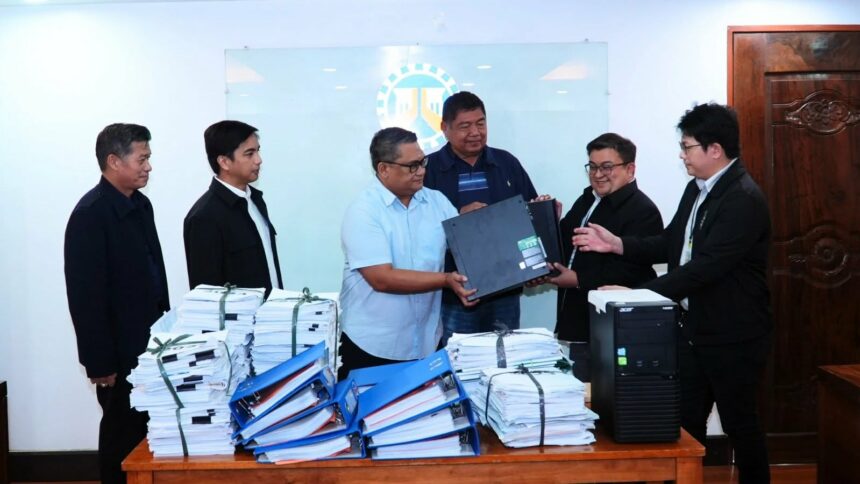
The Office of the Ombudsman (OMB) on Tuesday, Dec. 23, officially received the computer, electronic gadgets, and decade-long office records of the late Department of Public Works and Highways (DPWH) Undersecretary Maria Catalina Cabral, as part of its ongoing investigation into alleged irregularities in flood control projects nationwide.
Assistant Ombudsman Mico Clavano confirmed that the turnover was made in compliance with a subpoena duces tecum issued to the DPWH last Monday.
“The CPU and files of Undersecretary Cabral have been sealed and delivered to the custody of the Office of the Ombudsman. It will remain sealed until we are able to do a digital forensic test,” Clavano said.
DPWH undersecretaries Nicasio Conti, Arthur Bisnar, Ricardo Bernabe III, and Charles Calima Jr. led the handover of Cabral’s records, which span the past 10 years.
These include documents related to the programming of the National Expenditure Program (NEP) and other official materials.
The department assured full cooperation with the Ombudsman and other authorities overseeing the probe.
Cabral had been under investigation for her alleged involvement in a multi-billion-peso flood control scam, which implicated DPWH officials and private contractors.
Clavano described her role as “on a systematic scale,” noting that she had been in contact with at least five prosecutors regarding different cases.
One public example cited was her text message to Senator Tito Sotto, asking what projects he wanted inserted into the NEP—an indicator of the system she was allegedly part of.
Cabral last appeared before Ombudsman officials on Dec. 3.
Just weeks later, she was found unresponsive near the Bued River, about 20 to 30 meters below the highway in Tuba, Benguet, on December 18.
Police confirmed her death in the early morning of December 19 after recovering her body in Barangay Camp 4.
Authorities will conduct a forensic review of Cabral’s devices and records to verify the integrity and completeness of the data, which may shed further light on the extent of the anomalies under investigation. (Czarina Ong Ki, Trixee Rosel)