The death toll from the magnitude 6.9 earthquake that struck Cebu and nearby areas on Tuesday night, Sept. 30, has risen to 72, following the confirmation of three additional fatalities, the National Disaster Risk Reduction and Management Council (NDRRMC) said.
According to the latest NDRRMC report, at least 294 people were injured—most of them struck by falling debris during the tremor.
The agency noted, however, that the casualty figures are still subject to validation.
The quake, with epicenter located 17 kilometer north of Bogo City in Cebu, also affected around 171,000 people from 47,221 families in Central Visayas.
Assessment teams were immediately deployed in various parts of Cebu and nearby areas.
Based on the latest data, six bridges and three roads were rendered impassable.
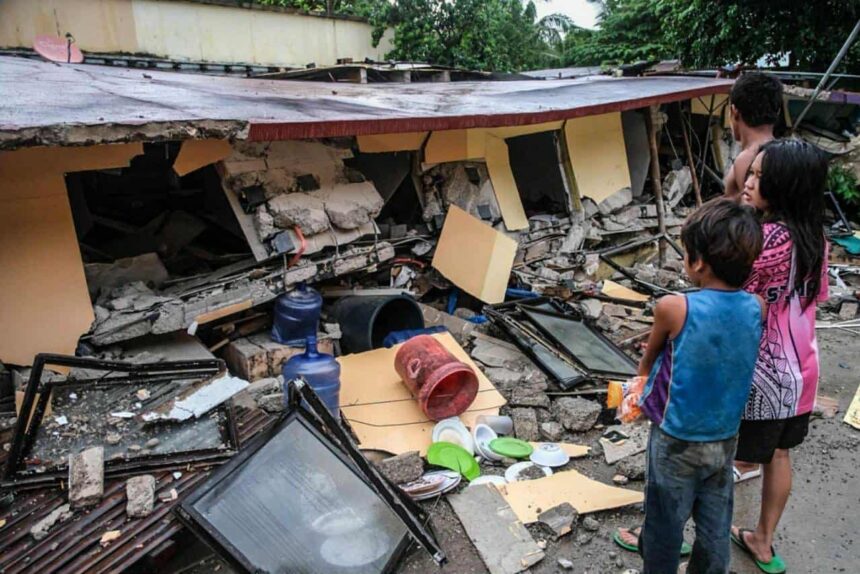
Several establishments were also damaged and rapid assessment of buildings and critical infrastructure was already ordered by the Department of Public Works and Highways (DPWH).
Of the 606 damaged houses in Central Visayas, 96 totally collapsed.
A total of 87 infrastructure in the same region were also damaged based on the NDRRMC report.
Power and communication lines were also affected and as of 11 p.m. on Wednesday, the NDRRMC said 48 areas in Western Visayas and 10 areas in Central Visayas were still suffering from power outages.
Three areas in Central Visayas are also experiencing communication problems.
Additional manpower were sent to Cebu from various government agencies to assist in the disaster response, including relief distribution and search and rescue operations.
AFTERSHOCKS
Meanwhile, aftershocks continued to occur after the powerful earthquake, with the Philippine Institute of Volcanology and Seismology (Phivolcs) logging more than 2,000 aftershocks as of 6 a.m., Thursday, Oct. 2.
Phivolcs reported 2,461 aftershocks, of which 498 were plotted by three or more seismic stations.
The tremors had magnitudes ranging from 1.0 to 5.0, though only 13 were felt.
Despite the high number of recorded aftershocks, most were too weak to be noticed without instruments.
Phivolcs earlier warned that aftershocks may persist for days to weeks after the main shock. (Aaron Recuenco, Ellalyn Ruiz)