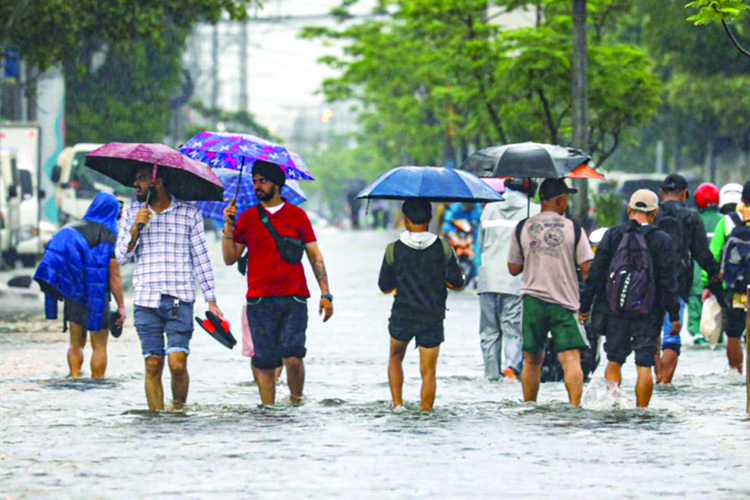
Health Secretary Ted Herbosa has urged residents in flood-affected areas to seek immediate medical attention if they experience early symptoms of leptospirosis, warning that the disease can escalate quickly and lead to severe complications.
His call comes as the Department of Health (DOH) recorded 3,037 leptospirosis cases nationwide from January 1 to July 19, with more than a third of the infections reported shortly after the onset of the rainy season.
Of the total cases, 1,114 were logged after June 8—just a week after PAGASA officially declared the start of the rainy season on June 2.
From July 13 to 31 alone, the DOH documented 569 new cases in hospitals across the country.
“Very important, magpatingin kaagad kung ikaw ay lumusong sa baha. After one week, nilalagnat, naninilaw, nanghihina—importanteng magpatingin na sa ating mga doctor, sa mga ospital,” Herbosa stressed during his visit to Nangka Elementary School in Marikina, which currently serves as an evacuation center for families displaced by recent floods.
Leptospirosis is a bacterial infection commonly contracted through floodwaters contaminated with animal urine.
In its severe form, it can cause kidney failure, organ damage, or death.
Herbosa said the DOH is closely monitoring the situation and preparing for more severe cases that may require hospitalization and dialysis.
He added that the department has pre-positioned stocks of doxycycline, an antibiotic used for preventive treatment, but emphasized that it must be taken only under medical supervision.
“Marami kaming stock [ng doxycycline]. Nirereseta ito, hindi basta iniinom,” he said. “Ang antibiotic, kailangan may doctor’s supervision. Doctor ang magdedesisyon kung kailangan kayong bigyan.” (Jel Santos)